How mobile home demolition debris is sorted and hauled
A mobile home becomes several material streams: metal frame and siding, wood, wall and roof materials, fixtures, contents, and sometimes concrete. Safe separation depends on condition, contamination, site room, and what local facilities currently accept.
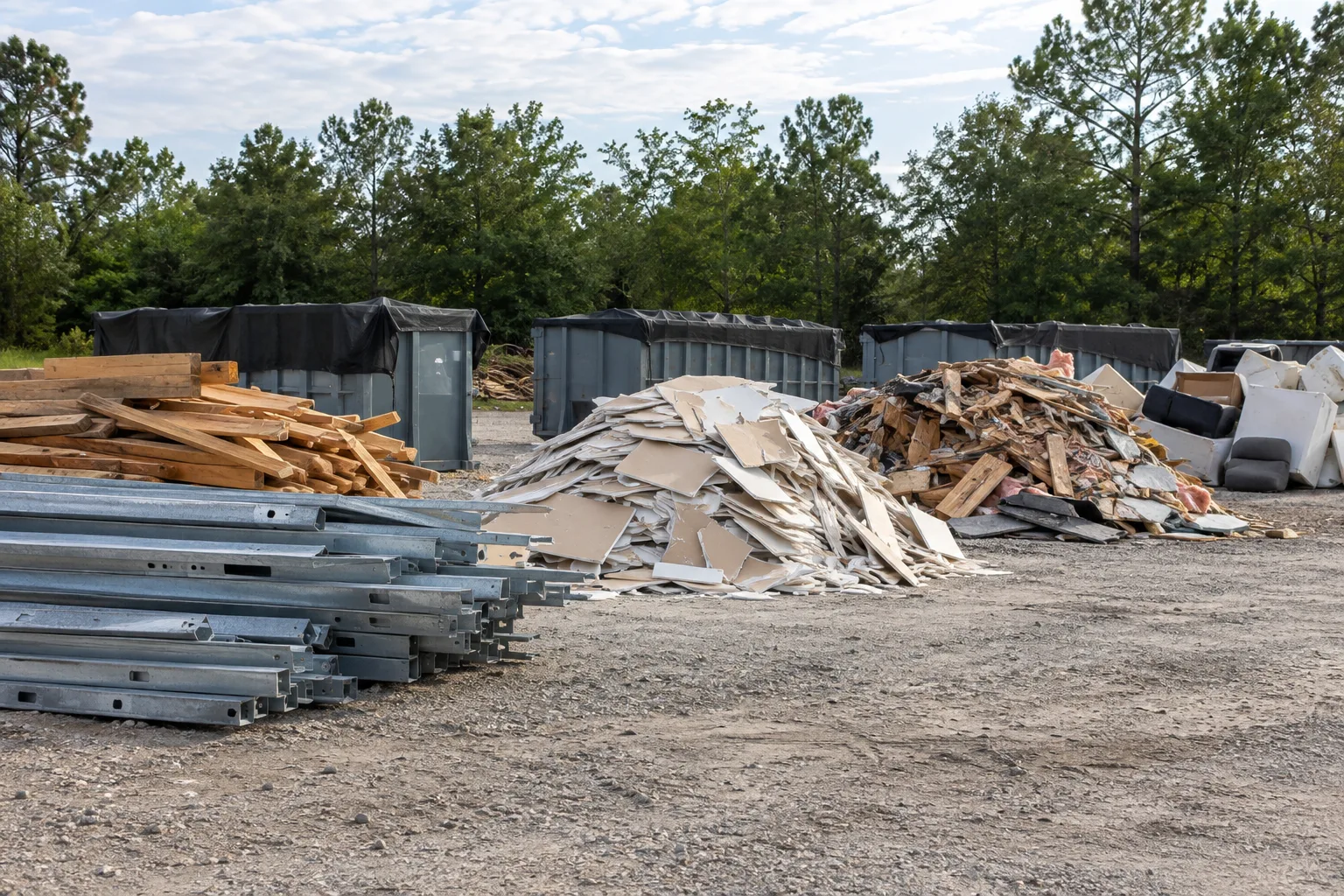
Inventory before loading
Begin with the structure and attachments, then list remaining contents, appliances, HVAC equipment, tires, tanks, chemicals, batteries, roofing, wet material, concrete, and anything suspected to require special handling. A mixed pile hides weight and exclusions that a written inventory exposes.
| Group | Why it may be separated |
|---|---|
| Steel frame and metal siding | Dense reusable material with different handling from mixed debris |
| Wood framing | High volume that can be kept apart when clean and practical |
| Wall, floor, and roof materials | May contain adhesives, insulation, moisture, or suspect material |
| Fixtures and contents | Some items have separate facility rules or preparation needs |
| Concrete and masonry | Heavy material that can exceed ordinary container weight limits |
| Special or unknown material | Needs identification and an approved handling path before loading |
Container choice follows material and access
A large container is not automatically the best answer. Container size, weight limit, truck access, ground bearing, exchange space, loading height, and facility rules all matter. Tight lots may need staged exchanges; heavy concrete may need its own load even when space is available.
Ask for destinations without demanding a percentage
It is reasonable to ask how metal, clean material, mixed debris, concrete, and excluded items will be handled. It is not reasonable to assume every component will be recycled or donated. Condition, contamination, local demand, facility rules, and current capacity control the result.
The EPA’s abandoned mobile homes toolkit recommends assessing materials and identifying appropriate recycling, salvage, and disposal options before deconstruction. That is planning guidance, not a guaranteed destination for every load.
- List materialSeparate ordinary structure, contents, concrete, and suspect or excluded items.
- Match containersUse volume, weight, access, and facility rules to choose the loading plan.
- Control the work zoneKeep sharp material, dust, traffic, and neighbors inside the safety plan.
- Save receipts and recordsKeep disposal and project records required by the contract or permit.