Should you keep or remove the mobile home concrete pad?
Keep the pad when it is permitted, useful, and in suitable condition for the next plan. Price removal when it blocks the next use, is damaged, creates a drainage or safety problem, or must leave under the approved redevelopment scope.
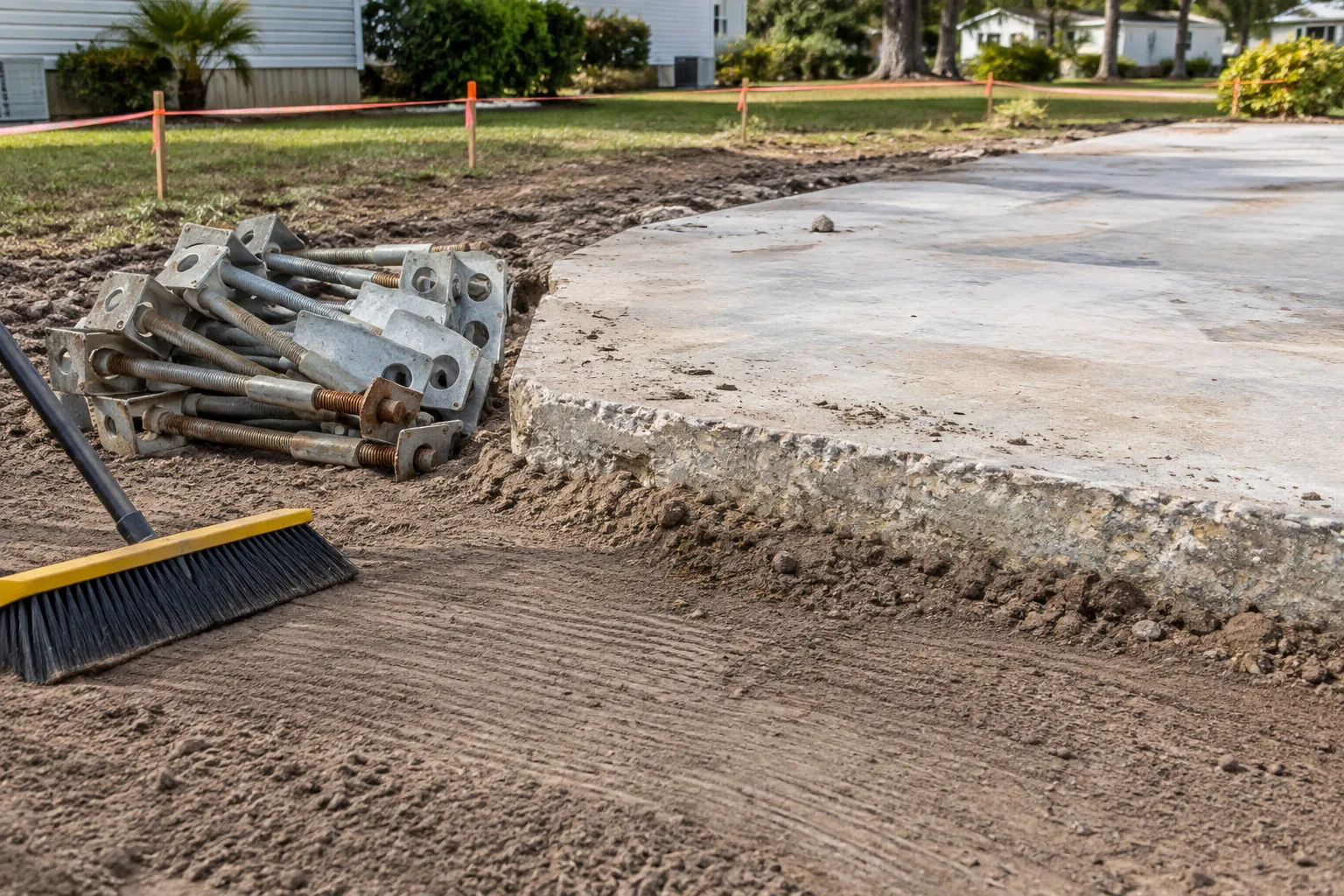
Decide from the next use of the property
A pad that looks convenient may not meet the dimensions, condition, drainage, setbacks, or engineering needs of the next structure. A pad that seems unnecessary may still provide a permitted parking or storage surface. Ask the responsible designer, contractor, or permitting authority what the next use requires before paying to remove or protect it.
| Keep it when | Price removal when |
|---|---|
| The next approved use can use the footprint | The next structure or site plan conflicts with it |
| Condition and drainage are acceptable for that use | Cracking, settlement, or drainage creates a problem |
| Utilities and anchors can be handled safely | Abandoned components must be removed or relocated |
| Protecting it is practical during demolition | Equipment access makes preservation unrealistic |
| Local requirements allow it to remain | The permit or approved scope requires removal |
Inspect what the surface does not show
Estimate thickness, reinforcement, edge condition, footings, runners, piers, anchors, and nearby utility lines. Do not assume a thin surface slab. Removal weight and breaking effort change quickly when the pad is reinforced, thickened, or tied to other concrete.
Write protection or removal into the contract
If the pad stays, define equipment limits, acceptable marks, anchor treatment, debris cleanup, and which cracks or defects already exist. If it goes, define the concrete limits, underground exclusions, haul-out, backfill material, rough grade, and whether compaction or testing is included.
- Confirm the next useAsk what the future plan requires instead of guessing from appearance.
- Inspect the assemblyRecord thickness, edges, reinforcement clues, anchors, utilities, and damage.
- Compare scopesPrice protection and removal as distinct choices when the decision is not final.
- Define the handoffState debris, backfill, rough grade, drainage, compaction, and testing boundaries.