What to do before removing a storm-damaged mobile home
Keep people away from unstable areas, treat damaged utilities as hazards, document conditions from a safe distance, and confirm insurance or agency requirements before debris moves. The removal estimate should reflect the post-storm site, not the home’s old condition.
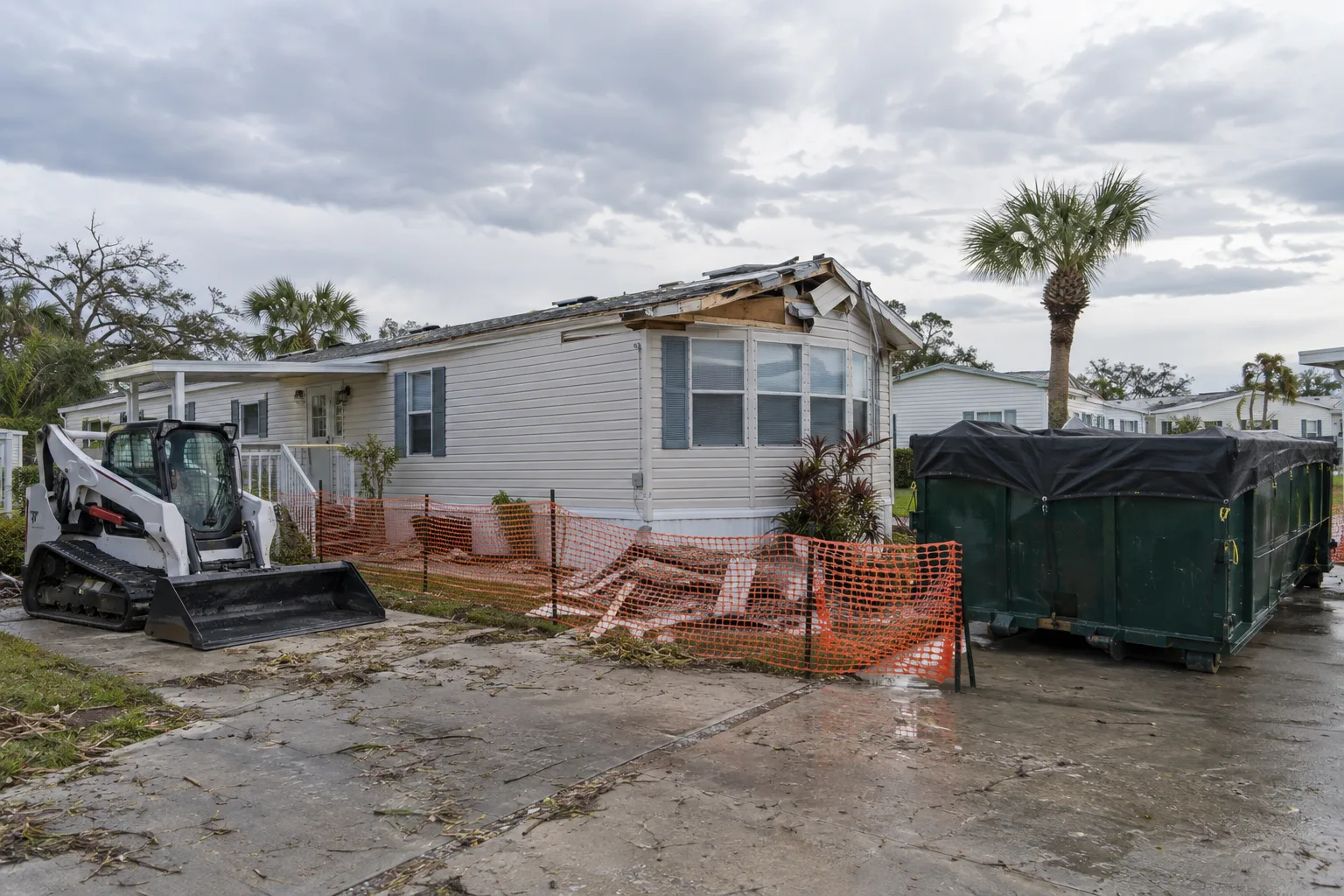
Control access first
Do not enter a leaning, shifted, flooded, fire-damaged, or partly collapsed home to collect belongings or measurements. Keep children, neighbors, and pets outside the affected area. Stay clear of downed lines, damaged service equipment, fuel odors, unstable trees, loose roof sheets, and standing water near electrical sources.
Create a record before cleanup
From a safe position, take wide images of all sides, the street approach, utility equipment, fallen trees, scattered materials, water lines, nearby structures, and blocked access. Save the date, address, owner contact, insurer or agency claim information, and any instruction about preserving evidence.
- Property and claim contacts
- Photos from safe public or stable areas
- Known utility shutdown or release status
- Park or community emergency instructions
- Loose material that could leave the property
- Restricted areas and safe access route
- Changes since any earlier estimate
Treat unknown material carefully
EPA guidance for debris and damaged buildings notes that damaged buildings can contain asbestos-containing products and other hazardous or unknown materials. Do not break, bag, burn, or mix suspect material based on appearance alone. Qualified assessment and the applicable local or state requirements should guide handling.
Keep insurance, permits, and demolition separate
An insurer may require documentation before material moves. A utility may require its own release. A demolition authority may require permits and inspections. Park management may control access hours. The contractor’s estimate should identify what it handles and what must be complete before mobilization.
- Stabilize the perimeterKeep people away and report urgent utility or public hazards.
- Document conditionsPreserve a safe visual record and the contacts tied to the property.
- Confirm approvalsCheck insurer, owner, park, utility, permit, and contractor responsibilities.
- Update the scopePrice the damaged structure, changed access, containment, debris, and finish from current conditions.